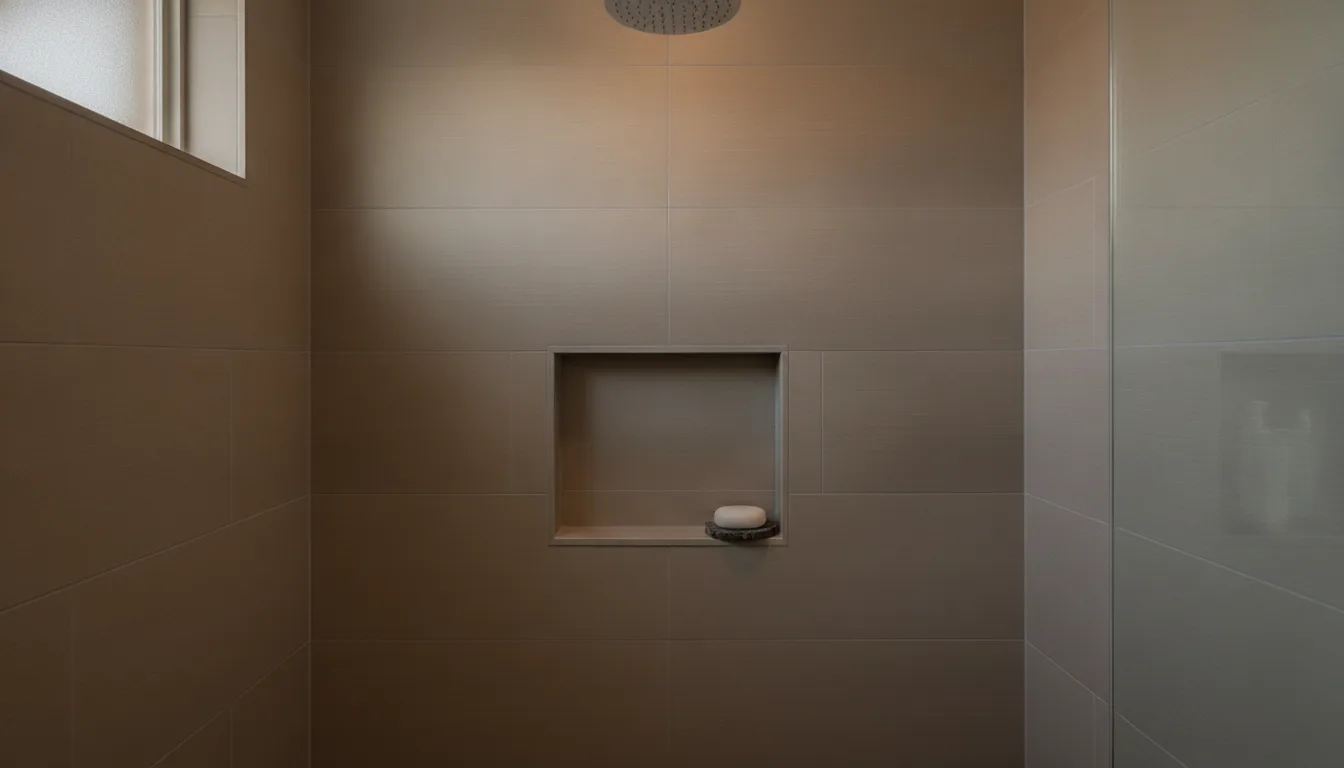
The standard shower niche size you see in catalogs is usually 12-by-12, 12-by-24, or 16-by-20 inches, with about 3-1/2 inches of depth in a 2-by-4 wall and a 48-inch height from the finished floor. Those are product conventions, not a California code size. Choose finished storage for your bottles first, then have the remodeler check the wall and the exact model’s installation dimensions. A label size is not enough to cut the opening.
Prefabricated families such as Schluter KERDI-BOARD-SN publish their own finished and outside dimensions. Order from that sheet, then mock up reach in your shower, including a seated position if you will sit.
Before your shower remodel, bring the tallest bottle you use and a sketch of where you want storage. Decide whether you want one tall opening, separate shelves, or storage reachable from a shower seat. Those choices give the installer something specific to measure.
Compare product size with usable storage
There is no single size to buy for every shower. For example, Schluter’s KERDI-BOARD product sheet lists KERDI-BOARD-SN niches in 12-by-6, 12-by-12, 12-by-20, and 12-by-28-inch sizes, with a listed depth of 3-1/2 inches. These are examples from one product family, not a universal framing specification.
Ask the installer to mark three different measurements on the plan:
| Measurement | What to confirm |
|---|---|
| Finished storage opening | Will the actual bottles fit after tile, trim, and any shelf are installed? |
| Outside product dimensions | What are the dimensions of the exact niche model, including its flange? |
| Wall opening and support | What opening and framing does that product’s installation detail require? |
For a rectangular niche, label width and height explicitly. A tall, narrow opening and a wide, horizontal opening can use the same pair of numbers but occupy very different parts of the wall. Ask for a dimensioned drawing rather than approving a photograph alone.
Choose a height by checking reach
Mark the proposed bottom edge and each shelf on the wall with removable tape. Check the position while standing where you will shower, and while seated if that is how you will use it. Bring the bottles into the mock-up so you can check clearance above a pump dispenser.
In a shared bathroom, have each user check the proposed location. If one person cannot comfortably reach it, discuss a second storage position or a different arrangement. A niche intended for bottles should not double as a grab bar or seat.
Record the height from the proposed finished shower floor. Confirm that the drawing accounts for the floor build-up rather than measuring only from an unfinished surface. For a tub-shower, check reach from the tub as well as from a standing position.
Check the wall before choosing a wide niche
Ask the contractor to check framing, plumbing, wiring, and other obstructions before committing to the location. Do not assume that a wide niche fits between studs, or that cutting a stud is an acceptable way to make it fit. Have any framing changes evaluated as part of the project design.
For an exterior wall, ask specifically how the proposed recess affects the wall assembly and insulation. Do not approve removal of insulation simply to gain storage depth. Ask whether another wall, a different niche size, or a surface-mounted storage option better suits the room.
The bathroom plumbing service page can help you frame the plumbing portion of the conversation. A photograph of the finished shower cannot establish what is inside its walls.
Settle waterproofing and tile details together
Ask the installer for the installation instructions for the exact niche and wall system. Confirm how the niche joins the surrounding waterproofing, how corners and fasteners are treated, and how the bottom surface will drain. Do not assume every prefabricated niche has the same details or needs no additional work at its perimeter.
Compare a prefabricated niche with a site-built design by the finished result you need. Ask which option suits the wall and tile layout, what components the installer will use, and how the work follows the selected system’s instructions. Avoid mixing products based only on similar-looking packaging.
Use your actual tile sample to discuss the niche edges. Ask where cut tiles, grout lines, trim, and shelves will land. The bathroom tile buying guide covers the wider selection process; the niche drawing should settle the small details before installation.
What should a shower niche quote include?
Request an itemized niche addition to your remodel proposal. For a retrofit into an existing shower, ask the contractor to explain what will be opened and how the surrounding finish and waterproofing will be restored. Confirm whether matching replacement tile is available before agreeing to a small patch.
Compare these items across proposals:
- The niche model or custom dimensions, including shelves and trim.
- Any wall investigation, framing, plumbing, or electrical changes.
- The waterproofing system and its connection to the existing or new shower.
- Tile removal, replacement tile, edge finishes, and disposal.
- Permit responsibilities and exclusions from the quoted work.
Bath Pro SD does not set installation prices. Have the professional price your specific wall and scope instead of treating a generic add-on figure as a local quote. If a larger tub-to-shower conversion is already planned, ask for the niche as a separate line item so you can decide whether it belongs in the project.
Confirm permit scope before opening the wall
Ask the contractor and the building department responsible for your address whether the proposed work needs approval, or a revision to an existing permit. Do not assume that a permit for a broader remodel automatically covers a later design change.
For a property within the City of San Diego, start with Development Services. For unincorporated areas, use County Planning & Development Services. Other incorporated cities have their own departments. Describe the wall and plumbing changes, not just the word “niche.”
Bring a clear request to the remodeler
Save a photo of the shower, your bottle measurements, the taped placement, and the tile or niche model you are considering. Note what is still undecided. That gives the professional a practical starting point without implying that the wall is ready to cut.
Bath Pro SD connects San Diego County homeowners with licensed, independent bathroom remodel professionals. You arrange the assessment, quote, contract, and installation directly with the remodeler. Describe your project on our contact page to request a referral.
Frequently asked questions
Does a 12-by-24-inch niche fit between my studs?
The label alone cannot answer that. Confirm which dimension is horizontal, the product’s outside dimensions, and the required opening. Have the contractor check the actual wall and support requirements before ordering or cutting.
Should I choose the niche height before picking tile?
Check your reach early, then settle the position with the tile layout and finished floor height. Mark the shelves as well as the opening, and test with the products you will store there.
Can a niche be added to an existing tiled shower?
Ask a remodeler to assess the wall, existing waterproofing, and available replacement tile. Request a restoration plan and an itemized quote before deciding whether a retrofit makes sense. A finished shower does not reveal those conditions from the surface.
Is a prefabricated niche ready to use without further waterproofing work?
Follow the instructions for the exact niche and wall system. Ask the installer to explain the perimeter connection, corners, fasteners, and drainage details rather than assuming all prefabricated products install the same way.