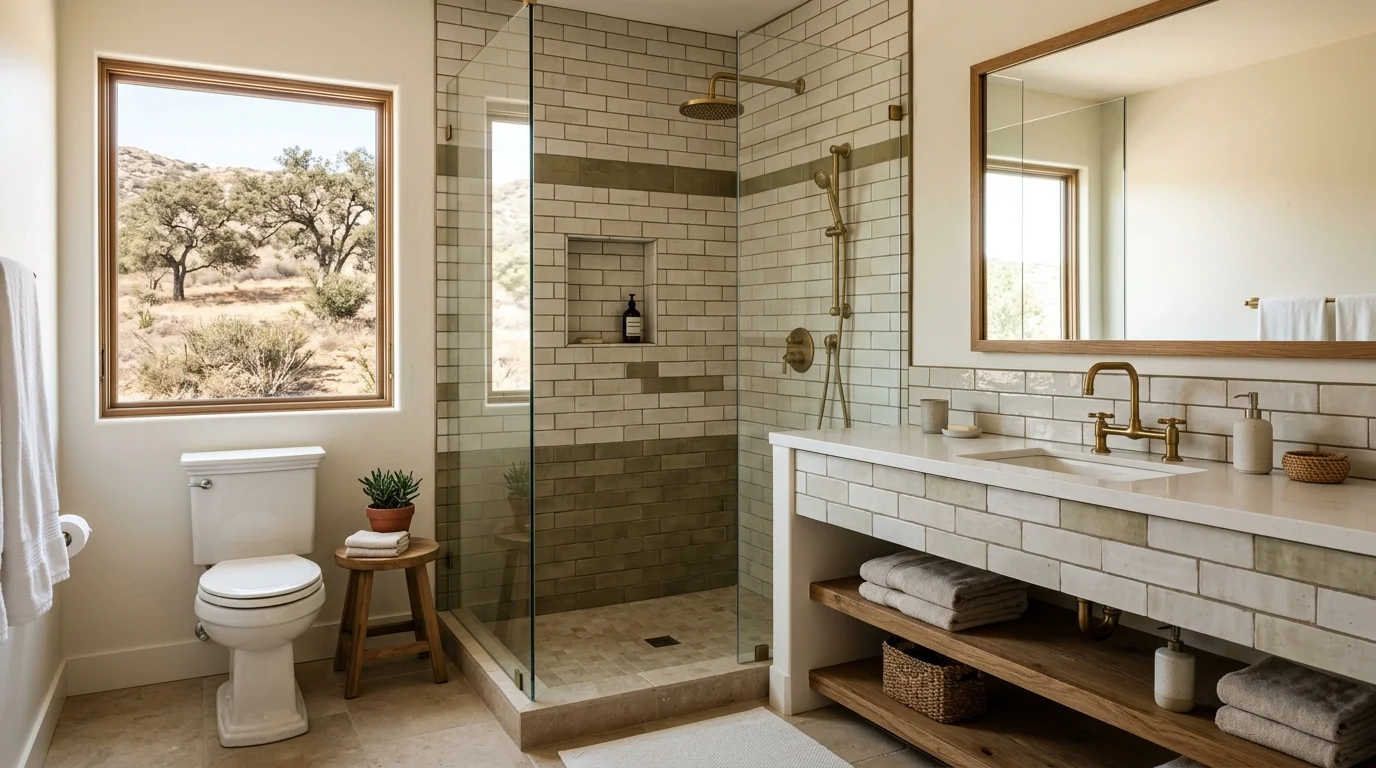
Planning a bathroom remodel in Hidden Meadows starts with questions that city properties may not face. The fixture plan must account for a private well, a septic system, and the property’s actual permit jurisdiction. Confirm those conditions before choosing a shower valve or approving plumbing changes.
The same approach applies in Ramona and Valley Center. Each property needs an address-specific review, not assumptions based on its community name.
Adding fixtures when the septic system is fixed capacity
Start by comparing the current bathroom with the proposed plan. List every toilet, sink, tub, and shower already connected. Then show which fixtures will remain, move, or be added.
That written comparison gives the County and your remodeler a clear question. It also separates a fixture replacement from a plan that changes the home’s plumbing layout. Don’t rely on phrases such as “simple remodel” or “same bathroom.” Put the proposed work on paper.
The specific San Diego County septic rule for adding bathroom fixtures couldn’t be confirmed from the available primary materials. That includes any rule about septic capacity reviews or evaluations. Before adding fixtures, contact the County of San Diego and ask what applies to the property.
Ask whether the County can identify records for the existing septic system. Describe the proposed fixture plan precisely. If the County gives instructions, keep them with the remodel documents. Don’t substitute advice from a seller, neighbor, or prior project.
A licensed remodeler can then plan around the confirmed answer. If the scope includes moving drains or water lines, review the choices involved in a bathroom plumbing rough-in. The plan should identify what remains, what moves, and what still needs approval.
Our bathroom plumbing and repipe guide explains how to organize a plumbing discussion. For a septic property, add the County response to that conversation. It should be settled before the design depends on an added fixture.
Don’t accept an invented septic limit or capacity figure. If no verified figure is available, the correct answer is “not confirmed.” The County sets the applicable requirements for unincorporated properties.
Well pressure and what a new shower valve expects
For a well-fed property, don’t assume the bathroom has a standard pressure profile. Have the licensed pro measure the conditions at the bathroom. Ask for results while the shower runs alone and while another fixture operates.
Write down the measurements and the test conditions. Words such as “good pressure” or “weak flow” aren’t enough for product selection. The chosen shower valve and showerhead should be compared with their manufacturers’ published installation requirements.
This step matters before tile and finished surfaces limit access. Ask the remodeler to identify the exact valve, cartridge, and trim. The product documents should state the conditions the manufacturer expects. If the measured conditions don’t match, the pro should explain the available options before installation.
Don’t assume a larger showerhead, different valve, or new pipe will solve an observed problem. Each addresses a different part of the system. The well equipment, existing piping, valve, and selected fixture should be considered together by the appropriate licensed pro.
Describe when the current shower changes noticeably. Note whether the change happens when a sink, toilet, washer, or outdoor spigot runs. These observations help the pro decide what to test. They aren’t a substitute for measurements.
If the project includes opening walls, document the accessible piping before it’s covered again. Record pipe locations, valve information, and any work the pro recommends. A full bathroom remodel should leave the homeowner with a clear record of the products and plumbing decisions involved.
No single pressure figure for Hidden Meadows could be confirmed. The property’s measured conditions and the selected manufacturer’s requirements must guide the choice.
Water quality, scale and fixture choice
Water quality decisions should begin with evidence from the property. Photograph any residue on the current showerhead, faucet aerators, glass, and drain trim. Note recurring cleaning problems without diagnosing their cause.
Visible buildup doesn’t provide a complete water analysis. No visible buildup doesn’t prove that every fixture material will perform the same way. If water quality affects the product decision, ask what current testing is appropriate and who should perform it.
Bring any existing water treatment information to the remodel consultation. Include equipment labels, service records, and available test results. Don’t claim a treatment system is necessary until the property’s conditions have been evaluated.
Product selection should consider maintenance as well as appearance. Ask how the valve cartridge is accessed. Check whether replacement parts are identifiable. Read the manufacturer’s cleaning instructions before choosing a finish. Keep those documents with the remodel records.
Avoid choosing fixtures from photographs alone. Two products with a similar appearance may have different installation instructions and maintenance steps. The licensed pro should confirm that the selected components fit the planned plumbing and measured well conditions.
Ask for the exact manufacturer and model before approving installation. That makes it possible to review written specifications instead of relying on a showroom description. It also helps the homeowner locate care instructions and product documents later.
Bath Pro SD doesn’t manufacture fixtures or provide product warranties. Any warranty belongs to the party that issued it. Get those terms in writing from the manufacturer or the independent pro before work begins.
Where jurisdiction sits outside the incorporated cities
Hidden Meadows, Ramona, and Valley Center are unincorporated San Diego County communities. Building permits there go through San Diego County Planning & Development Services, not the City of San Diego.
Whether a specific bathroom project needs a permit depends on its scope. The exact County permit triggers, fees, review times, and submittal requirements couldn’t be confirmed from the available primary materials. Don’t rely on a generic online checklist.
Give the County the property address and a written project description. Ask which department handles the proposed work and what current process applies. If the plan changes, confirm whether the answer changes too.
A mailing address alone shouldn’t replace a jurisdiction check. Verify the parcel’s jurisdiction before using any permit instructions. Incorporated cities run their own building departments, while the County handles building permits in unincorporated communities.
Contractor licensing is a separate check. Bath Pro SD connects homeowners with licensed, independent local pros, but doesn’t perform construction. Homeowners can verify a contractor through the official California Contractors State License Board lookup.
Check the license using the contractor’s legal name or license number. Compare the result with the name shown on the proposed contract. Keep a copy of the information you reviewed.
California also limits the down payment on a home improvement contract. Under Business and Professions Code section 7159.5, it can’t exceed $1,000 or 10 percent of the contract amount, whichever is less. That rule is a legal ceiling, not a price estimate from Bath Pro SD.
The contract should identify the independent contractor, project scope, and payment schedule. Don’t approve permit assumptions that aren’t tied to the correct jurisdiction.
Planning around access in Hidden Meadows, Ramona and Valley Center
Access planning must be specific to the property. Don’t treat every Hidden Meadows, Ramona, or Valley Center home as having the same conditions.
During the site visit, document the route from the parking area to the bathroom. Note gates, stairs, narrow passages, driveway conditions, and protected interior surfaces. If a delivery vehicle faces restrictions, confirm those details with the supplier and remodeler.
Measure doorways and turns along the material path. Record where tile, fixtures, and removed materials may be staged. Don’t assume a tub, vanity, or glass panel can follow the same path as smaller supplies.
The plan should also identify any property-specific access rules. Ask about gate instructions, parking limits, shared roads, animals, and household schedules. Put confirmed details in the project notes so each independent pro receives the same information.
Discuss planned water interruptions before work begins. Ask which parts of the home may be affected and who will communicate the schedule. No timing should be promised until the licensed pro has inspected the site and defined the scope.
For a larger remodel, create one scope sheet covering septic questions, well measurements, product models, permit jurisdiction, and access. That document gives each decision a source. It also exposes unanswered questions before they become change orders or product substitutions.
Hidden Meadows homeowners should leave the planning stage with property-specific answers. Ramona and Valley Center homeowners should expect the same. Community names provide context, but the parcel, existing systems, selected products, and confirmed County direction control the plan.
When to call us
Call when your bathroom plan affects plumbing, adds fixtures, or needs coordination with well, septic, and County questions. Call us at (858) 400-4896 and we’ll connect you with a licensed local bathroom remodeler.