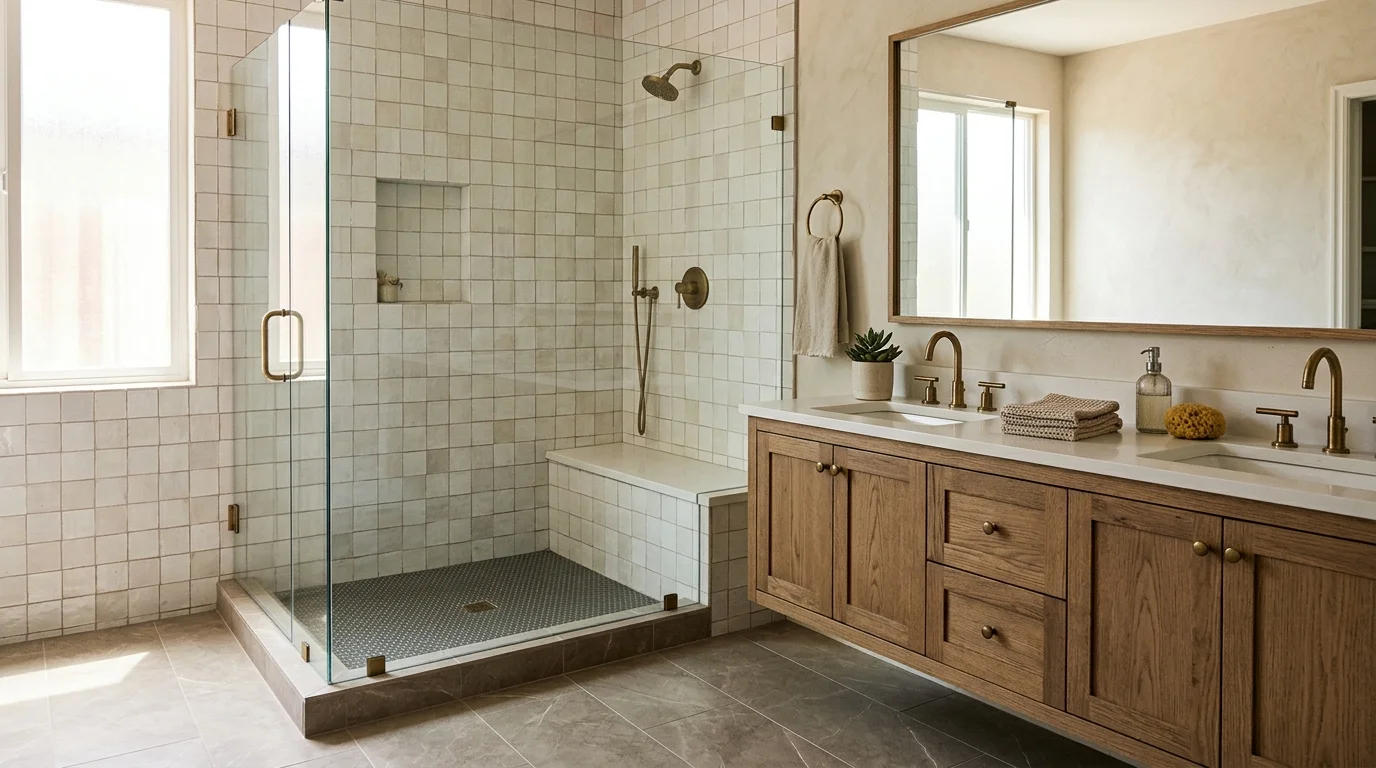
If you’re searching for a licensed tile contractor in Rancho Bernardo, start with the license number, not the portfolio. Confirm the record yourself, get the tile and waterproofing scope in writing, and compare bids line by line. These checks matter before demolition starts or money changes hands.
Looking up a license on the CSLB site
Ask every bidder for their legal business name and contractor license number. Get both in writing. Then enter the information into the official CSLB license check.
Compare the lookup record with the bid and contract. The names and license number should match the party offering to perform the work. If something looks inconsistent, stop and ask for an explanation. Don’t rely on a screenshot supplied by the bidder. Check the live CSLB record yourself.
California’s minor-work exemption is narrow. Under Business and Professions Code section 7048, the aggregate contract price must be less than $1,000. That total includes labor, materials, and all other items. The threshold became effective January 1, 2026.
The work must also be casual or minor and can’t require a building permit. Splitting one project into several smaller contracts doesn’t create an exemption. Someone advertising as a contractor also loses the exemption at any price. California law describes unlicensed contracting, unless exempted, as a misdemeanor.
Those limits make license verification especially relevant for bathroom tile projects. Don’t assume a small tiled area automatically qualifies for an exemption. Price alone doesn’t settle the issue, and permit needs depend on the complete scope.
Save the lookup result with your project records. Check it again before signing if time has passed. If the status or identity remains unclear, contact CSLB before proceeding. A polished estimate isn’t a substitute for a record you can verify.
What the license tells you and what it doesn’t
A license lookup gives you a record to compare against the bidder. It helps confirm whether the name and number presented to you correspond with the contractor record you’re reviewing. That makes it a useful first screen, but it isn’t the whole hiring decision.
The record doesn’t explain how the contractor will prepare your shower, floor, or wall. It doesn’t show whether the bid includes demolition, substrate repairs, waterproofing, trim, grout, sealant, or cleanup. It also doesn’t tell you whether communication will remain clear after work begins.
Ask the contractor to connect every important promise to the written agreement. Any promised warranty should identify who provides it, what it covers, and any exclusions. Bath Pro SD doesn’t perform construction or provide the contractor’s warranty. We connect homeowners with licensed, independent local bathroom remodelers.
Insurance and payment arrangements shouldn’t rest on assumptions. Ask the contractor for current documentation and verify unfamiliar terms with the issuing source. Don’t treat a license number as proof of every separate claim made during a sales conversation.
Permit questions also depend on the project’s scope. Bathroom remodels within the City of San Diego are permitted through Development Services. What sets a permit off depends on the full scope, and no reliable public checklist was available to publish here. Confirm the requirements for the Rancho Bernardo property and the proposed scope with the department before work starts.
The license check answers one important question. The written scope, supporting documents, and direct answers tell you much more about the actual proposal.
Questions about waterproofing that separate the pros
Tile is the visible finish. Your bid should also explain the work planned behind and around it. A contractor should be able to describe that process without hiding behind broad phrases such as “standard installation.”
Ask the same waterproofing questions during every estimate:
- Which waterproofing system is included in this bid?
- Which products and components will be used together?
- How will the surface be prepared before tile begins?
- How will corners, seams, penetrations, niches, and transitions be handled?
- Which written manufacturer instructions will guide the installation?
- What inspection or testing is included, and when will it happen?
- How will completed steps be documented before they’re covered?
- Which waterproofing work, if any, is excluded from the price?
- How will hidden damage or an unsuitable surface affect the scope?
You’re looking for specific, consistent answers. Write those answers into the agreement. A detailed conversation that never reaches the contract won’t protect the project from later misunderstandings.
Specific California shower-pan and waterproofing code details couldn’t be confirmed from the approved primary-source record for this page. Don’t rely on an uncited checklist from a contractor blog. Ask the contractor to identify the requirements applying to your address and scope. Confirm permit questions with the proper building department.
You can also review what belongs in a broader bathroom tile and flooring project before comparing estimates. If the project concerns cracked, loose, or damaged tile, read the San Diego bathroom tile repair guide as well. Repair and replacement proposals may address very different amounts of work.
Rancho Bernardo’s location doesn’t replace a written waterproofing plan. The contractor should explain the chosen system, the installation sequence, and who bears responsibility for each step.
Deposit rules under California law
Bathroom remodeling work falls under California’s home improvement contract rules. Business and Professions Code section 7159.5 limits the down payment to $1,000 or 10 percent of the contract amount, whichever is less.
The words “whichever is less” control the calculation. On a $30,000 contract, 10 percent would be $3,000. The down-payment cap would still be $1,000. You can read the rule in the official text of Business and Professions Code section 7159.5.
Don’t let a bidder describe the limit as a flat 10 percent rule. That leaves out half of the statutory test. If someone claims a different rule applies, ask them to identify it in writing. Verify that information before paying.
The remaining payment plan also deserves careful review. The contract should state the requested amounts, their timing, and the work connected with each request. This page doesn’t assert a separate cap or schedule for later payments because no such figure was confirmed in the approved claims record.
Keep the signed agreement, payment records, change orders, and written project messages together. Don’t replace contract language with a handshake promise. If the scope changes, ask for the revised work and price in writing before approving it.
Bath Pro SD connects homeowners with licensed independent pros. The contractor you hire controls the construction agreement and requests payment under that agreement. Read every payment term before signing.
Red flags in a tile bid
A tile bid should let you understand what you’re buying. A single total without a defined scope makes fair comparison difficult. It can also hide major differences between two proposals.
Watch for these warning signs:
- The license number is missing or doesn’t match the contractor record.
- The requested down payment exceeds California’s verified limit.
- The bid doesn’t identify the rooms or surfaces receiving tile.
- Demolition, disposal, preparation, and repairs aren’t clearly addressed.
- Waterproofing appears only as a vague line without a named approach.
- Product selections remain verbal or depend on undefined allowances.
- Trim, grout, sealant, transitions, and finishing details aren’t discussed.
- Permit responsibility is missing from a project that may need review.
- The bidder declares that no permit is needed before reviewing the full scope.
- Major promises appear in conversation but not in the agreement.
- You’re pressured to approve work before questions are answered.
Give each Rancho Bernardo bidder the same information. Share the same measurements, room photos, fixture plan, and tile selection. Ask each contractor to separate included work from exclusions. This makes differences easier to see.
Don’t compare totals until you’ve compared scope. A lower bid may cover less preparation, fewer surfaces, or different materials. That doesn’t automatically make it wrong, but the difference should be visible before you choose.
Look closely at change-order language too. Ask how unexpected surface damage will be documented and priced. The approved record doesn’t contain market rates for tile work, so this page doesn’t publish an average or “starting at” figure. Contractors set their own proposals based on the actual project.
The strongest bid isn’t always the longest. It should still identify the contractor, scope, products, responsibilities, payment terms, and exclusions in plain language.
When to call us
Call when bathroom tile work includes a shower, broad surface replacement, or a larger remodel that needs a licensed local pro. Bath Pro SD will match you with an independent bathroom remodeler who can assess the Rancho Bernardo project and provide a written proposal. Call us at (858) 400-4896 and we’ll connect you with a licensed local bathroom remodeler.