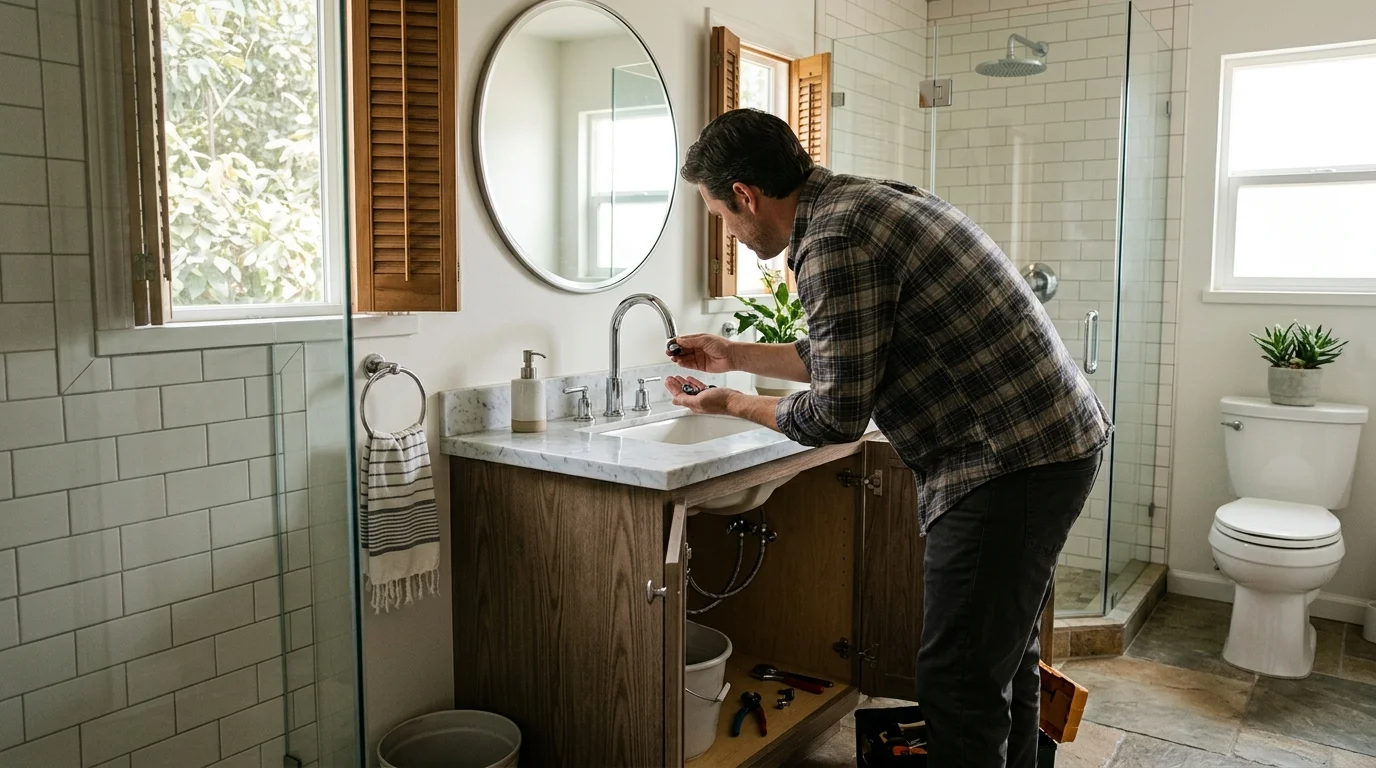
When low water pressure hits an Oceanside bathroom, start by mapping where it happens. One weak outlet points toward that fixture, while weak flow across the home points farther upstream. The pattern, not a guess about the most expensive repair, should guide the next step.
One fixture or the whole house
Begin with the bathroom fixture where you noticed the change. Run the sink on cold, then hot. Check the shower or tub separately. Notice whether the toilet also refills differently after a flush.
Next, compare the bathroom with another part of the home. A kitchen faucet, laundry sink, or accessible outdoor faucet can provide a useful comparison. Don’t open everything at once for the first check. Test each outlet separately, then compare how the flow changes when another fixture runs.
These patterns can help narrow the search:
- One weak faucet suggests a restriction at that faucet.
- Weak hot water alone suggests a hot-side issue.
- One weak shower suggests checking that shower’s components.
- Several weak bathroom fixtures point toward a shared branch.
- Weak flow throughout the home points toward the main supply, a regulator, or another property-wide issue.
Each pattern is a clue, not a final diagnosis. A partly closed valve can resemble a blocked pipe. A clogged fixture component can feel like a larger plumbing failure.
Also note whether the change was sudden or gradual. Record the time and which fixtures were running. That information helps a licensed pro repeat the condition instead of working from memory.
Don’t diagnose the piping from the Oceanside neighborhood alone. A house near Coast Highway and one east of I-5 may have different plumbing histories. Past additions and bathroom renovations can also change how a home is supplied.
If every fixture changed suddenly, check current notices from the water provider shown on your bill. Ask a nearby neighbor whether their flow changed too. A neighborhood pattern calls for a different next step than a problem limited to your property.
Aerators, cartridges and the five-minute checks
The simplest checks belong at the affected fixture. Start with the faucet aerator, which is the small fitting at the end of the spout. If it’s removable and you’re comfortable handling it, protect the finish and keep loose parts away from the drain.
After removing the aerator, inspect its screens and openings. Rinse away loose material, then briefly compare the faucet’s flow without it. Expect splashing. If normal flow returns, the restriction is inside the removed part. If nothing changes, reinstall it and continue upstream.
A showerhead may have a similar screen at its connection. Don’t force a fitting that won’t move. Scratched finishes and leaking connections can turn a simple inspection into a larger repair.
Hot and cold behavior matters here. Weak flow on only one temperature setting may point toward the faucet cartridge, a stop valve, or that side’s supply. Uneven temperatures don’t prove which part has failed. They only narrow the area that needs inspection.
Look beneath the sink without disconnecting anything. Check whether a flexible supply line appears sharply bent. Notice any moisture, staining, or corrosion around connections. Confirm that the fixture’s shutoff handles haven’t been moved recently, but don’t force a stiff valve.
At a tub or shower, the working parts may sit behind finished trim. Follow the fixture manufacturer’s instructions before removing anything. If the model can’t be identified, take clear photos of the handle and trim. A licensed pro can use those details when selecting compatible parts.
These quick checks aren’t a promise that the repair takes five minutes. Their purpose is to separate an accessible fixture problem from something deeper. Stop before opening a wall or loosening a connection that could leak.
Galvanised supply lines and what they do over decades
If a licensed pro identifies galvanized supply piping, the pipe’s interior deserves attention. Corrosion and accumulated material can narrow the path available for water. The outside of a visible pipe doesn’t show the full condition inside it.
Restricted piping often creates a broader pattern than a dirty aerator. More than one fixture may feel weak. Flow may drop further when another faucet opens. Some branches can perform differently because the piping route, fittings, and past alterations aren’t identical.
Those signs still don’t prove that the entire home needs new piping. A single valve, cartridge, or short branch can produce similar symptoms. The home’s age doesn’t settle the question either. Previous owners may have replaced some sections while leaving others in place.
A useful inspection identifies the visible pipe material and follows the affected branch where possible. The pro can compare conditions at several fixtures and test the supply at selected points. Ask where the restriction was found and what evidence supports the proposed repair.
If more than one bathroom is affected, read our bathroom plumbing repipe guide before approving a large scope. It explains how branch work and broader replacement differ.
Don’t accept a whole-home repipe recommendation based only on one slow sink. Ask whether the aerator, cartridge, stops, and fixture supply were checked first. A large repair should match a property-wide diagnosis.
Pressure regulators and where they sit
A pressure regulator, if the property has one, affects water entering the home. It generally sits near the point where the main supply enters the building. Depending on the layout, that may be near an exterior wall, a garage, or the main shutoff area.
Don’t assume every round fitting near a meter is the regulator. Don’t adjust an unfamiliar device to test a theory. Photograph the piping layout and let a licensed pro identify each component.
Pressure and flow aren’t the same observation. Pressure describes the force in the system. Flow describes the water delivered through an open fixture. A restriction can reduce flow even when a pressure reading appears steady.
A pro can compare static pressure with the reading taken while water runs. That comparison helps show whether the change appears only under demand. It can also keep a fixture restriction from being mistaken for a regulator problem.
We couldn’t confirm a current Oceanside pressure target from an approved city source for this page. Ask the water provider named on your latest bill for its current guidance. Don’t rely on an unsourced number from a forum or an old repair article.
The provider can also confirm whether a current service condition affects your address. If neighboring homes share the change, report the pattern to that provider. If the condition stops at your home, the next inspection should focus on the property’s supply and fixtures.
A regulator diagnosis should include an actual test and identification of the device. Shower feel alone can’t establish that the regulator has failed. Ask for the readings and the test conditions in writing before approving replacement.
When it points at a repipe
A repipe becomes a reasonable discussion when the evidence extends beyond one fixture. Persistent restrictions across several rooms, identified galvanized piping, or poor flow through multiple branches can justify a closer evaluation. They don’t automatically require replacing every supply line.
The first decision is scope. A localized branch replacement may address an isolated section. A broader project may be proposed when restrictions appear throughout the system. Ask the pro to show which fixtures and pipe sections support that recommendation.
A written scope should identify the planned pipe routes and affected rooms. It should also explain which walls, ceilings, cabinets, or tile areas need access. Ask what testing will be completed after the plumbing work. These details make competing proposals easier to compare.
If a bathroom remodel is already planned, coordinate the plumbing diagnosis before finalizing tile, vanity, and shower layouts. Our bathroom plumbing rough-in and repipe service connects homeowners with licensed independent pros for that work. Bath Pro SD makes the connection and performs no physical work.
Oceanside is an incorporated city, so permit questions go through its own building department rather than County Planning & Development Services. Whether a specific repair or repipe requires a permit depends on its scope. We couldn’t confirm the applicable triggers, fees, or processing details from an approved source for this page. Ask the contractor to verify the current requirements with the city before work begins.
Before signing, confirm the contractor’s status through the official CSLB license check. Match the business name and license information to the proposed contract. Don’t rely only on a logo, vehicle, or marketplace profile.
One weak shower doesn’t justify opening every wall. Several documented restrictions may point toward a larger supply problem. A careful diagnosis should explain why the proposed scope fits the symptoms.
When to call us
Call when low pressure affects several fixtures, returns after simple cleaning, or appears tied to concealed bathroom piping. Call us at (858) 400-4896 and we’ll connect you with a licensed local bathroom remodeler.