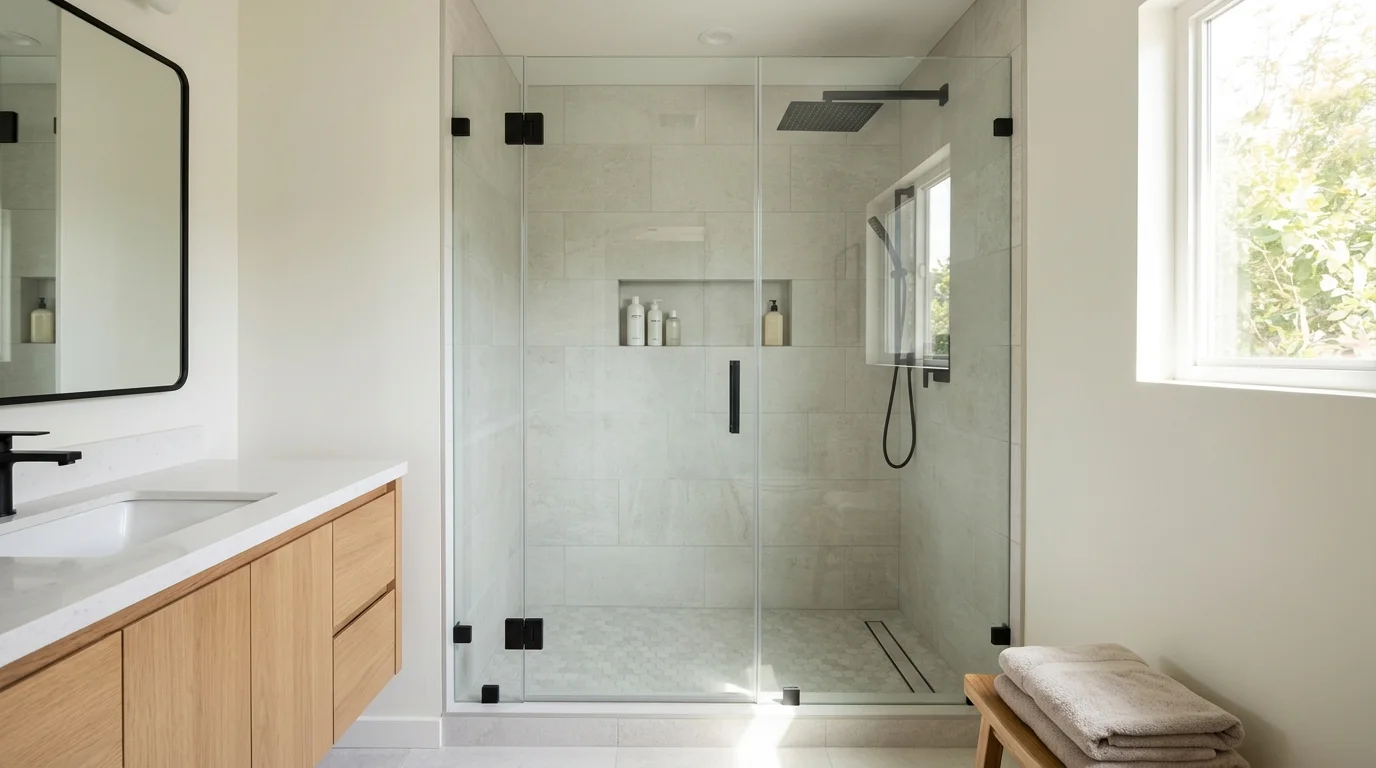
For a shower replacement in San Diego, read “replacement” as a limited component swap only when the bid lists that exact scope. A “remodel” may reach the pan, wall surfaces, plumbing locations, framing, or nearby finishes, but the heading guarantees none of that. Compare the line items, exclusions, permit responsibility, and change-order terms before choosing a proposal.
Replacing the enclosure and nothing else
The narrowest project changes only the named enclosure. That might mean removing a glass door, frame, or fixed glass panel and fitting a new one. It doesn’t automatically include the shower pan, wall tile, plumbing fixtures, or the area outside the shower.
The word “enclosure” needs special attention. One contractor may use it for the glass and frame. Another proposal may use it for a complete wall-surround system. Don’t decide from the heading. The materials and labor lines should identify what the contractor plans to remove, furnish, and install.
Ask the proposal to answer these questions:
- Which existing pieces will be removed?
- Which new components will the contractor supply?
- Will the wall surfaces and shower pan remain?
- Are trim, sealant, and finish work included?
- Does the scope include hauling away removed materials?
Photographs can help define the boundary. Mark which surfaces stay and which ones go. If a tile wall remains, the quote should explain how the new enclosure meets that wall. If nearby paint, baseboard, or flooring isn’t included, that exclusion should appear in writing.
For a Downtown San Diego or Mission Valley condo, also ask about access and building requirements. The contractor’s proposal should identify who handles those details. Don’t assume they’re included because the project sounds small.
A limited enclosure swap may fit when the remaining shower stays unchanged. If the pan, walls, fixtures, or layout are also part of the plan, compare the proposal with a defined shower remodel scope.
What a remodel opens up that a replacement doesn’t
A remodel gives the proposal a wider possible boundary. The scope could address the shower pan, wall finish, plumbing locations, storage, curb, glass, and nearby bathroom surfaces. Each item still needs to be written into the bid. The word “remodel” alone isn’t a complete scope.
Start with the intended layout. State whether the shower footprint stays in place. Identify any requested changes to the entry, curb, fixture position, niche, bench, or glass. Then have the contractor separate work inside the shower from work elsewhere in the bathroom.
That distinction matters when comparing bids. One proposal may stop at the shower opening. Another may include flooring outside the shower, wall repairs, painting, or related plumbing work. Those aren’t equal bids, even if both carry the same project title.
Permit responsibility also belongs in the written scope. Whether a specific bathroom project needs a permit depends on its scope. For property within the City of San Diego, confirm the current process with Development Services.
County Planning & Development Services handles building permits in unincorporated communities such as Ramona and Alpine. Incorporated cities, including Oceanside, Chula Vista, and El Cajon, run their own building departments. Use the property’s actual jurisdiction when checking requirements.
We couldn’t confirm one permit-trigger checklist or fee that applies across San Diego County. The City and County sources establish jurisdiction, but they don’t supply one countywide answer. Ask the contractor to identify the responsible agency and confirm the current requirements before work begins.
For a broader look at planning decisions, read the San Diego shower remodel guide.
Prefab pan and surround vs tile
A prefab proposal centers on named manufactured components. A tile proposal involves individually selected finishes and a site-built assembly. Neither description tells you whether the quote is complete. The specifications do that.
For a prefab pan or surround, ask for the manufacturer, product line, model, color, dimensions, and included accessories. The bid should identify the pan, wall panels, trim pieces, shelves, doors, and fixtures separately. If the contractor proposes a combination of prefab and tile, that boundary should be clear.
Tile proposals need a different set of details. Record the tile material, size, pattern, grout selection, edge treatment, niche finish, and shower-floor finish. Ask the contractor to name the proposed substrate and waterproofing system without relying on a generic phrase such as “tile installation.”
Don’t compare tile and prefab bids by the final total alone. First confirm that both proposals address the same demolition boundary, plumbing work, glass, fixtures, permit responsibility, and finish work. A quote that excludes the shower door isn’t directly comparable with one that includes it.
The actual opening should guide the selection. Have each contractor measure the alcove, entry, drain location, and nearby surfaces. Don’t approve a product using only a catalog label or a rough room measurement.
If tile is part of the project, a defined bathroom tile scope helps separate the finish selection from the rest of the shower work. It also makes substitutions easier to track before the contract is signed.
Removal and disposal of the old shower
Removal can be a major difference between two proposals. One bid may include taking out every named shower component. Another may begin after the old enclosure has already been removed. The quote should make that starting point unmistakable.
Have the contractor identify the demolition boundary in plain language. It should address:
- Glass doors, panels, frames, and hardware
- Wall panels, tile, trim, and backing materials
- The shower pan, curb, and drain-area finishes
- Fixtures and accessories scheduled for replacement
- Debris removal, hauling, and final cleanup
Ask how the contractor will protect the route between the bathroom and the exit. For a condo or attached home, confirm who handles building access and any property-specific instructions. These details belong in the project discussion before demolition begins.
Disposal language should also be direct. “Removal included” doesn’t necessarily answer whether debris leaves the property. The proposal should say whether hauling and disposal are included, excluded, or listed separately. If a disposal charge may change, the bid should explain how that change will be approved.
Concealed conditions can’t be confirmed from the finished surface. The contract should explain what happens if removal reveals work outside the quoted scope. Ask for photographs, a written description, and a priced change order before authorizing additional work.
This is also the moment to define what remains. If part of the old tile, drywall, flooring, or trim stays, mark that boundary. A precise demolition scope protects the comparison because every contractor is pricing the same starting point.
Reading which one a contractor is actually quoting
Start by removing the labels “replacement” and “remodel” from your comparison. Read each proposal as a list of promised work. If a component, task, or responsibility isn’t written down, ask the contractor to clarify it before signing.
Use the same questions for every bid:
| Bid area | What the proposal should identify |
|---|---|
| Existing shower | The exact components being removed and retained |
| New materials | Product names, dimensions, colors, finishes, and substitutions |
| Plumbing | Fixtures and any specifically proposed location changes |
| Walls and pan | The materials and defined installation boundary |
| Glass | Door type, panels, hardware, and whether installation is included |
| Permits | Who checks the jurisdiction and handles any required process |
| Disposal | Whether debris removal, hauling, and disposal are included |
| Extra work | How concealed conditions and change orders are documented |
Write each contractor’s answer beside the matching line. This exposes exclusions that a project title can hide. It also helps prevent a broad remodel proposal from being compared with a limited enclosure replacement.
Bath Pro SD matches homeowners with licensed, independent local pros. Once you receive a contractor’s information, confirm the license through the official CSLB license check. Make sure the name on the contract matches the license information you reviewed.
Payment terms deserve the same attention. For a California home improvement contract, the downpayment may not exceed $1,000 or 10 percent of the contract amount, whichever is less. Keep that “whichever is less” qualifier attached to the rule.
Finally, underline every action verb in the scope: remove, furnish, install, reconnect, finish, haul, and clean. Then circle every exclusion. That quick review usually reveals whether the contractor is quoting a component replacement or a broader shower remodel.
When to call us
Call when your shower project includes removal, tile, plumbing, layout changes, or a contract that needs clearer boundaries. Call us at (858) 400-4896 and we’ll connect you with a licensed local bathroom remodeler.