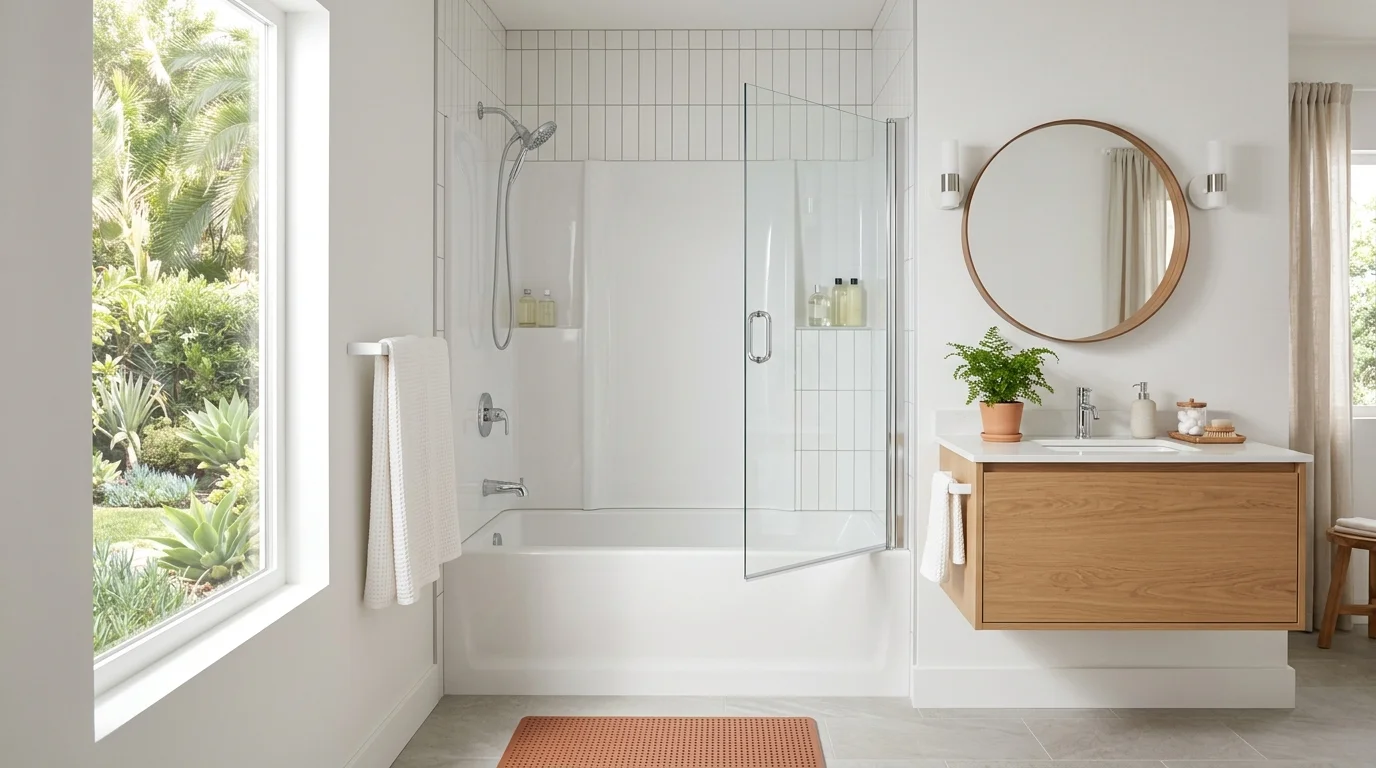
A custom acrylic tub replacement can reduce the work completed inside your Pacific Beach bathroom. Bath Pro SD can connect you with a licensed, independent local remodeler, but no installation schedule can be confirmed before that pro inspects the room and defines the scope.
The important word is “custom.” Ask what will be measured, ordered, cut, removed, and replaced. Then get the proposed schedule in writing.
How an acrylic surround goes in
An acrylic tub project can include several different scopes. One proposal may cover only the wall surround. Another may include a new tub, wall panels, plumbing trim, and related finish work. A contractor may also propose covering an existing finish instead of removing it.
Don’t assume “tub replacement” means every visible part gets replaced. Ask the remodeler to identify each item in writing:
- Whether the existing tub stays or comes out
- Whether any current wall finish will remain
- Which surfaces will be exposed for inspection
- How the panels will be measured and fitted
- Who supplies the tub, surround, trim, and accessories
- How corners, edges, and plumbing openings will be finished
- What happens if the opened wall needs additional work
That written scope matters more than a product photo. It separates the planned installation from work that hasn’t been inspected or priced.
For a full replacement, start by comparing the proposed scope with a licensed pro’s bathtub installation and replacement service. Ask whether “custom” describes the panel dimensions, the color and finish, the accessory layout, or the entire bathing area. Those aren’t the same promise.
Access also belongs in the plan. A Pacific Beach home near Mission Boulevard may present different loading questions than a detached home closer to Crown Point. If the bathroom is upstairs, behind a narrow gate, or inside a managed building, tell the remodeler before ordering materials. The pro can then explain how those conditions affect the proposal.
Bath Pro SD makes the connection. The independent remodeler handles measurements, material selection, construction, and any warranty offered for that work.
Where the speed actually comes from
“Fast installation” needs a defined starting and ending point. A salesperson might mean fewer working days inside the bathroom. A homeowner might mean the entire period from the first call through final completion. Those timelines aren’t interchangeable.
Ask every contractor to separate the schedule into clear stages. Those may include an initial inspection, product selection, field measurements, ordering, delivery, removal, installation, and final details. Don’t accept one broad time claim that leaves those stages unexplained.
An acrylic proposal may reduce on-site work when the design keeps the existing layout and limits finish changes. Made-to-fit wall panels may also shift part of the preparation away from the house. However, a custom order can have its own production and delivery schedule. Only the contractor and supplier can confirm those details for the selected system.
The condition behind the current finish can also change the plan. A quote based on covering an existing surface isn’t the same as a quote based on opening the wall. Ask which assumption supports the stated schedule.
For a Pacific Beach condo, discuss building access before accepting a timeline. The contractor may need information about parking, elevators, working-hour rules, or material delivery. Bath Pro SD can’t confirm those building conditions or promise a completion date on the remodeler’s behalf.
A useful proposal states what must happen before installation begins. It should also explain what could pause the planned work. If speed is your priority, compare those details across proposals instead of choosing the shortest headline claim.
Seams, corners and long-term water behaviour
The acrylic face is only one part of the bathing area. Your proposal should also address panel joints, corners, edges, plumbing openings, and the connection between the surround and tub.
Ask the remodeler to walk through every visible transition. That includes the valve, spout, shower arm, shelves, trim pieces, window edges, and any change between acrylic and another wall finish. If the design has multiple panels, ask where their joints will land.
The answers should match the selected manufacturer’s written installation instructions. Request the product name and instructions before approving the work. That gives you something specific to compare with the contractor’s proposed method.
Don’t let the word “waterproof” replace a scope of work. Ask what will remain behind the new panels and what will be removed. If the contractor plans to cover the current surface, ask how that surface will be inspected first. If removal is included, ask how findings behind the wall will be documented.
Also clarify who handles future service at panel joints and fixture openings. Bath Pro SD doesn’t provide a construction warranty. Any workmanship warranty comes from the independent remodeler, while product coverage comes from the party identified in the product documents. Get both terms in writing before signing.
Cleaning expectations belong in this discussion too. Ask for the manufacturer’s approved cleaning instructions for the exact finish. Avoid relying on generic advice for a different acrylic product. The contractor should provide the correct care information when the selected materials are known.
Acrylic vs tile in a coastal bathroom
Acrylic and tile create different surfaces. Acrylic surrounds use fitted panels and generally present fewer visible joints. Tile uses individual pieces with grout joints and offers a different range of patterns, trim, and layout choices.
Neither description decides the project for you. The better choice depends on the room, the condition behind the current finish, your preferred appearance, and how much of the bathing area you want changed.
Acrylic may suit a focused replacement where the tub location and fixture arrangement stay in place. Tile may make more sense when the design depends on a specific pattern, niche layout, or transition into other tiled surfaces. A broader shower remodel may also be the better scope when the project reaches beyond the tub surround.
Pacific Beach’s location doesn’t automatically select one material. The remodeler still needs to inspect the individual bathroom. Ask how the proposed finish meets the ceiling, floor, tub, window, and any adjacent tile. Those transitions often reveal whether the design feels intentional or patched together.
Compare proposals using the same questions:
- What existing material will be removed?
- What will remain concealed?
- Which dimensions are measured specifically for this bathroom?
- Where will joints and trim pieces appear?
- What accessories are included?
- Which product and workmanship documents will you receive?
- What work isn’t included?
If you’re still deciding how much to change, use our shower remodel guide to separate a surface update from a larger rebuild. Then ask each licensed pro to quote the same defined scope. That makes the comparison clearer.
Avoid choosing from a sample alone. Ask to review the exact color, sheen, panel arrangement, edge details, and fixture locations proposed for your room. A material can look very different across a full wall than it does on a small sample.
When a surround hides a problem instead of fixing it
A surround can refresh what you see without answering every question about what’s behind it. That distinction matters when a proposal calls for installing panels over an existing finish.
Ask the contractor what can be inspected before the new surround covers the area. Point out any loose finishes, staining, movement, damaged edges, or recurring odors you’ve noticed. Those observations don’t diagnose the cause, but they help the licensed pro focus the inspection.
The written proposal should explain how unexpected findings will be handled. Ask who documents the condition, who discusses the options with you, and when additional work requires written approval. Don’t authorize an open-ended instruction to cover whatever is there.
Permitting also depends on the project’s scope. For a Pacific Beach property, check the current requirements with City of San Diego Development Services. No verified permit-trigger checklist or fee applies to every bathroom project, so confirm the answer for your specific address and proposed work.
Before signing, verify the contractor through the official California Contractors State License Board lookup. Match the record to the person or company named in the contract. Bath Pro SD connects homeowners with licensed independent pros, but you should still review the current license record yourself.
Acrylic isn’t automatically a shortcut, and tile isn’t automatically a full correction. Either project can be too narrow if the proposal avoids an existing condition that needs attention. The right scope starts with an inspection, a clearly named product, and a written explanation of what will remain behind the finished surface.
When to call us
Call when you want a licensed pro to compare acrylic replacement with a broader tub or shower remodel in Pacific Beach. Call us at (858) 400-4896 and we’ll connect you with a licensed local bathroom remodeler.