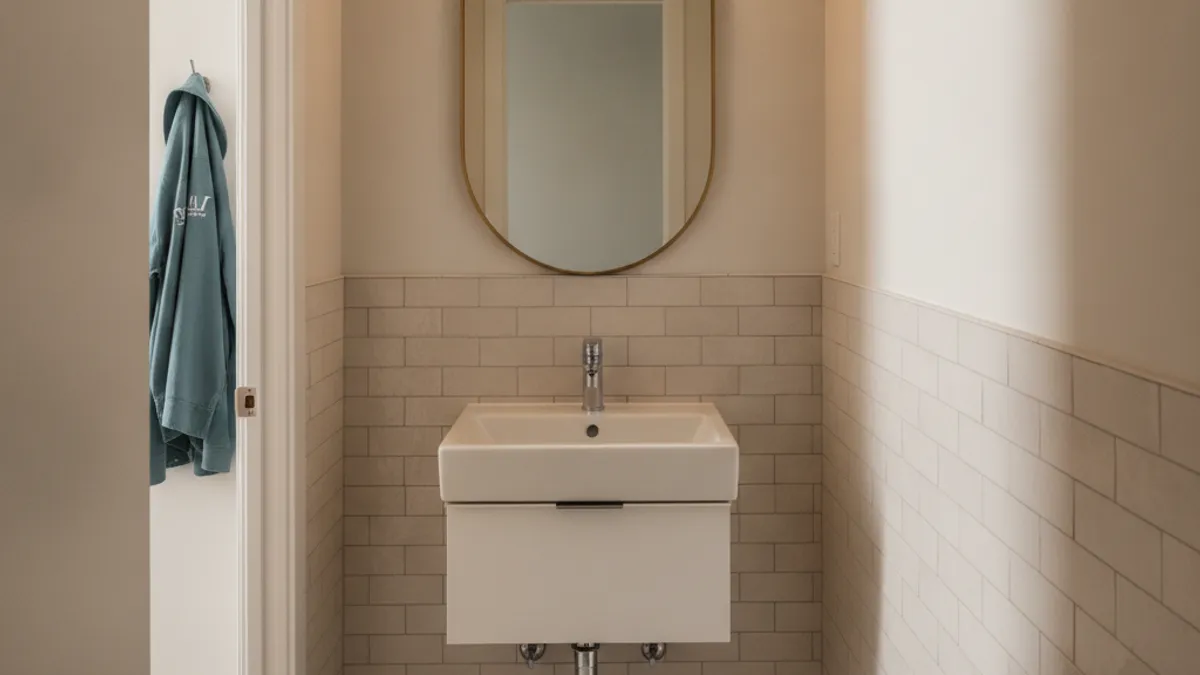
Adding a half bath in San Diego
A half bath addition in San Diego is a different quote when the drain and vent can tie into nearby plumbing versus when those lines have to travel or the framing has to change. Bath Pro SD does not set those prices. Compare a written scope from a licensed independent remodeler. Our full bathroom remodel cost guide covers a complete gut when a home needs more than a toilet and sink. The rest of this page is where it fits, what makes the scope swing, and what to ask before you sell.
Why so many San Diego homes only have one bathroom
Walk through El Cajon, La Mesa, or Spring Valley and you’ll find blocks of 1950s and 60s tract homes built with a single full bath serving three bedrooms. That was standard construction for the era. It works fine for the family that built it, and it becomes a real friction point the moment a household grows, a parent moves in, or the home goes on the market against newer listings down the street with two baths. A half bath addition is usually the fix, not a second full bath, because the goal is relief for guests and daily traffic, not another shower.
What is a half bath, exactly
A half bath is a toilet and a sink, no tub or shower. That’s the whole definition, and it’s also why it’s the cheapest bathroom to add. No shower pan, no waterproofing membrane, no glass enclosure. The two fixtures that need water and drain lines are the toilet and the sink, and both can run off a branch line from an existing bathroom or kitchen stack if one is close enough.
Where a half bath actually fits in an existing floor plan
The honest answer: it depends on what’s already running through your walls. The cheapest spots are the ones closest to existing plumbing.
A closet or coat nook near a kitchen or existing bathroom is the easiest conversion, since the drain and vent can often tie in without opening the wall between rooms. A corner of a garage, mudroom, or laundry room works almost as well, especially in homes where the laundry already carries a drain line. Under-stair space in two-story homes is a common spot too, though headroom and the toilet’s clearance requirements need checking before anyone commits to it on paper. The hardest and most expensive spot is a bedroom corner far from any existing wet wall, because the drain line has to run a longer distance to tie into the main stack, sometimes with a sewage ejector pump if gravity won’t do the job.
A half bath needs roughly 18 to 20 square feet at minimum: enough for the fixtures plus code-required clearances in front of and beside the toilet. Smaller than that, and it stops being a usable half bath addition and starts being a design problem.
What drives the cost of a half bath addition
Distance to existing plumbing. This is the single biggest cost driver. A half bath that ties into a drain line three feet away costs a fraction of one that has to run a new line twenty feet across the house.
Whether a sewage ejector pump is needed. If the new half bath sits below the main sewer line’s grade, or too far from it to drain by gravity, the job needs an ejector pump and a dedicated electrical circuit. Ask the plumber to price the pump as its own line.
Electrical and ventilation. Every half bath needs a GFCI outlet, a light, and a fan vented to the exterior (not into the attic). Straightforward if there’s an attic run available, more if the fan has to route through framing. Our bathroom electrical and lighting page covers what a proper circuit and fan setup involves.
Framing and drywall. Converting an existing closet is mostly plumbing and finishes. Framing a new enclosure inside a garage or under a staircase adds framing, insulation, and drywall to the scope.
Finish level. A builder-grade toilet, a pedestal sink, and a vinyl floor sit at the low end. A comfort-height toilet, a vanity with storage, tile flooring, and a nicer light fixture push it toward the top of the range.
A rough breakdown for a typical 20 square foot half bath addition converting an existing closet or nook:
- Design and permit: priced after measuring.
- Framing and drywall (if needed): priced after measuring.
- Plumbing rough-in and fixtures: priced after measuring.
- Electrical (outlet, light, fan): priced after measuring.
- Flooring and finishes: priced after measuring.
- Paint and trim: priced after measuring.
For the same scope with a longer drain run or an ejector pump, ask the plumber to price the longer run or ejector as its own line.
Do you need a permit to add a half bath in San Diego
Yes. Any new plumbing fixture triggers a permit from the city or county building department, and a half bath addition adds a new drain, vent, and water supply line where none existed. The inspector checks the rough-in before the wall closes, then checks the finished fixtures. Skipping the permit is the single most common reason a half bath addition becomes a problem at resale, because a home inspector or an appraiser will flag unpermitted plumbing, and some buyers walk rather than sort it out. Our bathroom remodel permit guide covers the timeline and what the inspection actually looks for.
How much value does a half bath add to a San Diego home
For a house with only one bathroom, agents in the county’s older tract neighborhoods consistently say a second bathroom, even just a half bath, is the difference between a buyer who schedules a showing and one who scrolls past the listing. The value isn’t only about resale math. It’s about whether the home functions for a family with a full bathroom tied up every morning, or a household with an aging parent who needs a bathroom on the main floor.
That said, a half bath addition is not a guaranteed dollar-for-dollar return, and no honest contractor will promise you a specific percentage back at sale. What is true: in a one-bath home, adding a second bathroom of any kind consistently moves it out of the buyer pool that filters listings by bathroom count, which is a real and measurable widening of your market at resale. Where it matters most is exactly the pattern above: 1950s and 60s San Diego tract homes with one bath and three or more bedrooms.
Half bath vs. full bathroom addition
A full bathroom addition (toilet, sink, and a shower or tub) runs close to double a half bath, because it adds a shower pan, waterproofing, tile, and a glass enclosure or shower curtain rod on top of everything a half bath needs. For most one-bath San Diego homes, a half bath solves the actual daily problem (guest and family bathroom traffic) at a fraction of the cost and disruption. A full bathroom addition makes more sense when the home is genuinely short on bathing capacity, not just toilet and sink access. Our small bathroom remodel page has the line items for both a half bath conversion and a full small bath, side by side.
Frequently asked questions
Can you add a half bath under a staircase?
Often, yes, if there’s enough headroom and floor space to meet the toilet’s clearance requirements (typically 15 inches from the toilet’s center to any side wall, 21 inches of clear space in front). A licensed contractor checks the actual dimensions before framing starts, since a lot of under-stair spaces look bigger on paper than they are once you factor in the sloped ceiling.
How long does a half bath addition take?
A straightforward closet or nook conversion with plumbing already close by usually takes one to two weeks from demo to finished paint. A half bath that needs a new drain line run, an ejector pump, or new framing runs three to four weeks, mostly waiting on inspections between the rough-in and the finish work.
Do I need a vent stack for a half bath?
Yes. Every plumbing fixture needs to vent, and a half bath’s toilet and sink typically tie into the nearest existing vent stack rather than needing a brand-new one through the roof. Whether that’s possible depends on how close the new half bath sits to existing plumbing, which is exactly why location drives cost so heavily.
Can I put a half bath in a garage in San Diego?
Yes, and it’s one of the more common spots, especially in homes where the laundry hookup already runs through the garage. The garage floor usually sits at a different grade than the house’s main drain line, so check early whether a gravity connection works or whether the job needs an ejector pump.
Is a half bath addition worth it if I’m planning to sell in a year or two?
In a home that currently has only one bathroom, yes, it’s one of the more reliable near-term improvements, because bathroom count is a hard filter many buyers search on before they ever see the listing. In a home that already has two or more bathrooms, the same money is usually better spent elsewhere.
Call (858) 400-4896. Bath Pro SD matches you with a licensed independent remodeler. A local pro looks at your actual plumbing runs, tells you the realistic spot for a half bath in your floor plan, and gives you a real number instead of a guess. For homes in El Cajon and La Mesa, where one-bath tract homes are common, this is one of the most requested small projects in those neighborhoods.