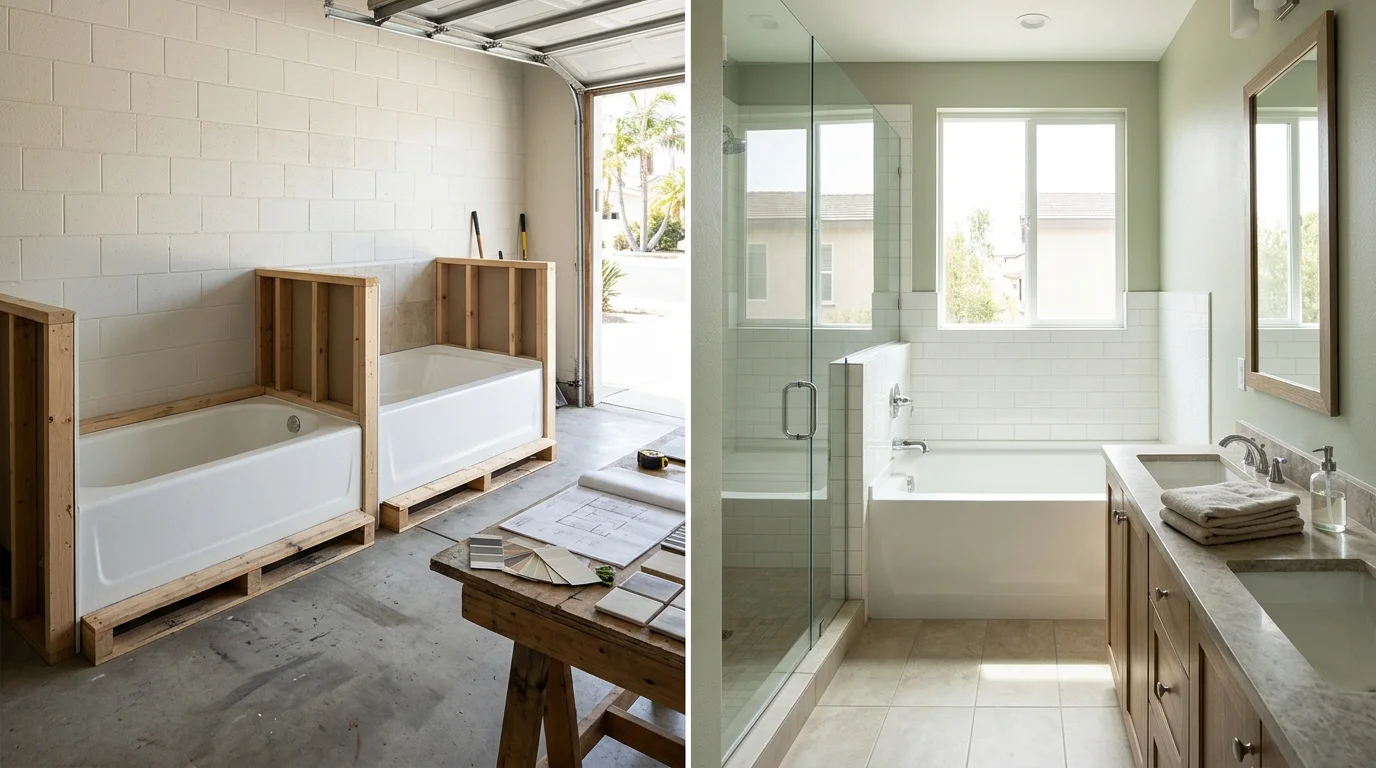
A replacement bid for a San Diego hall bath often splits on one material choice: a new enamel cast iron alcove tub or a new acrylic one. The outline on the floor looks the same. The job through the house does not. Weight, the hallway, and the floor decide more than the finish chip in your hand.
Weight, access, and getting a tub into a San Diego hall bath
The material choice starts at the door, not at the spout. A new alcove tub still has to clear the same hall, the same turn, and the same bathroom jamb the old one came out of. Mira Mesa tract halls are a common pinch. The run from the garage or the stoop is short. The corners are tight. A 60-inch alcove unit leaves almost no extra room once you add a helper and a door that only swings one way.
Older North Park and South Park houses add a second problem. Raised wood floors. A stair. A bathroom framed when crews expected to wrestle iron and the openings were mean. A second-floor hall bath over a crawl space is where this decision gets real. The tub is not only a finish. It is a load that has to be carried, turned, and set.
A published shipping weight for each model could not be confirmed here. Cast iron is the heavy option. Acrylic is the light one. That is the distinction you can use. How many pounds sit on your joists depends on the exact unit, the water, and whoever is in the tub. Have the installer measure the stair, the door, and the floor structure on site. A tape on the jamb beats a catalog claim.
Getting the old tub out uses the same path. Cast iron that has sat for decades may be cut or walked out in pieces if it will not turn the hall. Acrylic usually leaves as a shell. Neither path is casual weekend work. Under California Business and Professions Code 7028, acting as a contractor without a license is a misdemeanor unless an exemption applies. A licensed pro should set the new unit. Confirm the license on the CSLB lookup before anyone orders the tub.
Once the alcove layout is locked, bathtub installation is the work that follows. Shape choices such as alcove, freestanding, or soaking live on a separate page about bathtub installation options. This page is only the shell: enamel over iron, or acrylic over a reinforced plastic body.
Upper-floor Mira Mesa hall baths, and South Park seconds over raised floors, need that floor talk before anyone falls for iron. Ground-floor hall baths still need a clear path. Walk it with the installer. If the unit cannot make the turn, the prettier sample does not matter.
Heat retention, noise, and daily use
Showroom copy argues both ways on heat. Some makers say mass holds water hot. Some say a plastic shell insulates better than iron, which conducts. No verified minute-by-minute figure exists here for either claim. Treat the ads as ads. If you can, sit in both at a yard. Cold enamel on your back in the first minute is a real feel. Acrylic usually feels warmer to the skin when you step in. How long the bath stays hot after that depends on the fill, the room, and whether anyone keeps adding water. Ask the installer. Do not buy a number from a brochure.
Noise is easier to judge without a clock. A rigid, heavy shell deadens the spout and the sound of a bottle on the rim. A lighter acrylic unit can drum if the base is ignored. Support matters as much as material. An acrylic alcove tub set the way the maker specifies feels quieter than the same shell sitting on four high spots. That is a setting issue, not a brand of plastic.
Daily use in San Diego splits by room more than by climate. A Mira Mesa kids’ hall bath takes toys, bottles, and standing showers more than long soaks. Scratches and flex show up there first. A quieter soak in a North Park primary bath is where people notice the solid feel of iron. Or they notice they never stay in long enough to care. Inland hard-water spots stain both finishes if you let them dry. Mild cleaner, rinse, done. Harsh powder is how gloss dies on either surface.
Acrylic is not a cheap fiberglass gelcoat unit. It is not porcelain-enameled steel either. Fiberglass on its own is a different, often thinner product. Steel is a metal pan with an enamel coat, usually lighter than iron and noisier than both. If a bid says acrylic and the cut sheet says gelcoat, stop and read it. The question “are acrylic baths better than steel” is really this: steel is hard and can chip, acrylic is softer and can scratch, and neither one is cast iron.
People who want the soak and the quiet often lean iron, if the house will accept it. People who want a simpler carry and a warmer first touch often lean acrylic. Daily use decides more than a ranking of materials.
Chips, flex, and what fails first in each material
Cast iron fails at the enamel. Drop a bottle, a tool, or a toy on a sharp corner and you can chip through to metal. Left open, that chip can rust. The iron body itself is stubborn. The finish is the weak point. Repair is specialist work, not a wipe-on marker from the hardware aisle. Small chips can be filled. A bad hit on a visible wall of the tub is why some owners later look at refinishing.
Acrylic fails at the surface and at the flex. Fine scratches from grit and abrasive pads show as haze. A poorly supported floor can let the bottom oil-can when you stand in it. That movement is what people mean when they say a plastic tub feels cheap. A well-set acrylic alcove tub should not bounce. If it does, the setting is wrong. Ask the installer how they support the base. Do not assume the apron holds the whole load.
Which bathtub material lasts is the question under every bid. No verified lifespan in years belongs on this page. Maker warranties are marketing documents, not a public standard we can quote. What a licensed remodeler can tell you is what they pull out of local houses: iron tubs with intact bodies and tired enamel, acrylic tubs with worn floors in the standing zone, and steel tubs that dented. Your cleaning habits matter more than a slogan.
Pros of cast iron, in plain terms: a rigid feel, a quiet fill, an enamel face that resists light abrasion better than a soft plastic. Cons: the carry, the floor conversation, and chips that are ugly and slow to fix. Pros of acrylic: a lighter carry through a Mira Mesa hall, a warmer first touch, and small scratches a careful person can often blend. Cons: flex if the base is ignored, haze from bad cleaners, and a look that can go dull in a hard-used hall bath.
A fiberglass-only tub is usually the weaker cousin of acrylic. If the bid is trying to save money by swapping gelcoat for acrylic, that is a different product. Read the cut sheet. Cast iron versus fiberglass is not a close fight on rigidity. Cast iron versus a proper acrylic alcove tub is closer, and it turns on the house, not on a slogan.
Refinishing later vs replacing now
If the tub already in the alcove is cast iron and the body is sound, refinishing is a live option. You are not forced to choose a new material today. If the unit is acrylic and the floor is worn through, or the shell has flexed until the finish maps, replacement is usually the cleaner path. The full decision between coating what you have and pulling it lives on our page about bathtub refinishing vs replacement. This page stays on the new-shell choice.
An old cast iron tub can have salvage value. Scrap yards and restoration shops take them. No verified dollar figure belongs here. A tub that is chipped, cut, or painted may be worth only the haul-away. If you like the original iron and the floor can still hold it, refinishing keeps the mass you already paid to get upstairs. If you are gutting the room for a full bathroom remodel, a new acrylic alcove tub is often the unit that fits the new surround and the path through the house.
Replacement now makes sense when the drain, the waste-and-overflow, or the walls around the tub are coming out anyway. A new acrylic alcove tub replacement then rides along with the wet work. Replacement also makes sense when iron will not turn the stair. Refinishing later makes sense when the iron is already in, the enamel is the only complaint, and you are not opening the floor. Neither choice is a brand warranty. The matched local pro’s work is what is warrantied, on their paper.
Do not treat a refinish as a way to dodge a license. Coating and setting are still home improvement work. Check the contractor on the CSLB site. For a job inside the City of San Diego, permitting questions go to Development Services. Unincorporated communities go through County Planning & Development Services. Incorporated cities run their own building departments. Whether your specific swap needs a permit turns on scope. This page will not publish a trigger list.
Matching the tub to the surround and the floor structure
The tub and the walls have to agree. A new acrylic alcove tub is often paired with a matching wall system from the same line, or with tile that starts on a solid, square flange. Cast iron still needs a square set and a flange the wall can land on. Mixing a heavy iron tub with a flimsy wall kit is how joints open. Mixing a light acrylic tub with a tile surround is common and fine when the installer blocks, supports, and waterproofs as a system. Keep the tub flange and the first course of wall in the same conversation. The surround kit itself is a separate product decision.
Floor structure is the other match. Older North Park and South Park raised floors were not all built for a modern filled tub plus two adults. Mira Mesa slab halls skip the joist question and keep the hallway question. An installer who is honest will look at the subfloor, the joist direction, and any soft spots before they order iron. If the floor needs work, that work happens first. Guessing from a photo is how a tub sits out of level.
Do not invent a load number and then “reinforce to it.” Have the installer measure. If they cannot explain how the base of an acrylic unit is supported, pick a different pro. If they cannot explain the path for iron, do not order iron. The pros we connect you with are licensed and insured. They perform the physical work. Bath Pro SD does not.
Color and apron style are the easy part. Most alcove units in this market are white, with a visible front apron. Darker enamel on iron is a look some people want. Confirm the exact model, the drain hand, and the apron before the old tub comes out. A left-hand drain in a right-hand alcove is a wasted morning.
The right material is the one that fits the house you have. Cast iron belongs where the path is clear, the floor is sound, and you want the solid, quiet soak. Acrylic belongs where the hall is tight, the floor conversation is already complicated, or the room is a hard-used hall bath that will take a beating. A licensed local remodeler sets the tub.
When to call us
Call when you are choosing a new alcove tub and the bid is split between cast iron and acrylic, or when the hallway and the floor make the choice feel stuck. A licensed bathroom remodeler should measure the path, the jamb, and the structure before anyone orders the unit. Call us at (858) 400-4896 and we’ll connect you with a licensed local bathroom remodeler.