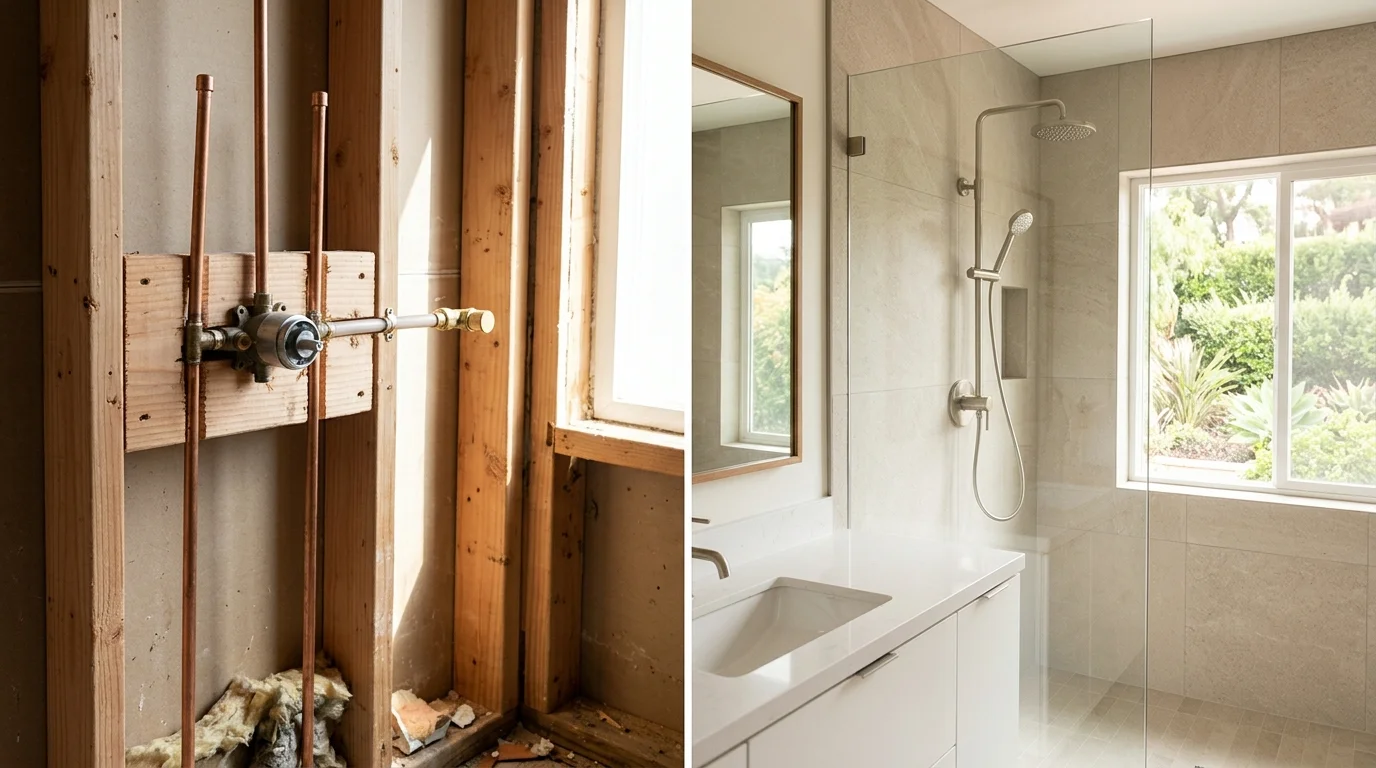
Someone flushes the toilet in a Mira Mesa hall bath and the person in the shower flinches. That jolt is a mixing problem, not a showerhead problem. On a San Diego remodel bid the decision shows up as two line items: a pressure-balance body or a thermostatic body. The pressure balance vs thermostatic shower valve choice is a bid line, not a showroom afterthought.
What each valve does when the water spikes or the toilet flushes
A shower mixing valve blends hot and cold before the head. Older two-handle mixers just open both pipes. They do not compensate when another fixture runs.
A pressure-balance valve watches pressure. A piston or spool sits between the hot and cold inlets. Flush a toilet and the tank grabs cold water. Cold pressure at the shower drops. The piston shifts and throttles the hot side in the same proportion. The mix ratio holds, so the spray should not leap to full hot. That is what a pressure-balance shower valve does.
It does not read temperature. It holds the ratio you set with the handle. If the water heater is recovering, the same handle position can feel cooler. One handle usually sets mix and flow together. Turn toward hot and the volume changes with it.
Common problems sit in the cartridge: grit, a sticky spool, a handle that needs a long sweep to get warm, and a shower that still jumps when the element is worn. A shower mixing valve replacement is often a cartridge swap if the body in the wall is sound. If the body is weeping into the cavity, treat it as a leak. That path is covered in shower and bathtub leaks around San Diego.
A thermostatic valve reads the mixed water. A sensing element opens and closes the ports to hold the temperature you set. Volume is typically a separate control. You can drop the flow and keep the same heat. That split is the point of a thermostatic shower valve remodel.
Ask the licensed plumber how that model behaves if one supply fails. Shutoff behavior is a product listing, not a number this page can confirm.
Where pressure-balance is enough in a San Diego hall bath
Walk a typical Mira Mesa family hall bath. One showerhead. A toilet in the same room. A washer sharing a wet wall. Kids in and out before school. That room does not need a spa valve. A pressure-balance body is usually enough.
The household already creates the classic pressure event. Someone flushes while someone else is in the shower. The balancing piston is built for that. A single handle is easier for kids and for guests who will not learn two controls. Guest baths across Clairemont and East County follow the same logic: one outlet and short showers.
Two-story Mira Mesa plans make this worse. The upstairs hall shower sits on the same cold line as a downstairs washer. Pressure-balance is the valve built for that stack.
Mira Mesa sits inland of the marine layer. Supply temperature and mineral content can shift through the year. A pressure-balance valve will track those shifts because it holds a ratio. That is a comfort issue, not a reason to skip the type. For most tract hall baths, a thermostatic upgrade is optional.
This choice is not a drain move. If the job is a tub-to-shower, the mixing valve is a separate line from trap and waste work. Do not let those scopes blur. The drain side is covered in plumbing in a tub-to-shower conversion. The valve type still has to be named on the bid.
Where a thermostatic valve earns the extra line item
A Carlsbad primary suite is a different shower. Longer use. Often a rain head plus a handheld. People who want the temperature waiting when they step in. That is where a thermostatic valve earns the extra line item.
Volume and temperature are split, so you can run a soft stream that is still hot, then open up to rinse. Multiple outlets need more flow than a single hall-bath head. A thermostatic body is often specified for that layout because the volume control can pass more water without dragging the mix off your set point. Confirm the actual flow capacity of the valve body with the plumber. This page will not invent a rating.
The type also helps in houses with wide supply swings. If a dishwasher, a laundry fill, and a shower can run at once, holding temperature (not only ratio) is the comfort upgrade people are paying for.
A thermostatic shower valve is worth the extra line item when the shower is the daily primary, when more than one outlet is on the wall, or when someone in the house needs a predictable temperature every time. Skip it as a default in a little-used guest bath.
Mineral scale is the real operating cost. Inland lines and some aging copper send grit and hardness through the cartridge. Thermostatic sensing elements can suffer. Pressure-balance pistons can too. Either way, the licensed plumber should plan a serviceable cartridge, not a body buried with no way back in. The disadvantage of a thermostatic shower is that extra complexity: more parts, a larger trim, and a higher line item.
Trim, blocking, and access after the tile is on
What you see on the tile is trim. What you cannot see is the valve body, the supplies, and the blocking.
The body mounts to blocking in the stud bay so it does not rock when someone leans on the handle. The plumber sets depth so the trim sits flush after tile and backing. A thermostatic trim is often wider or uses two controls, so the opening in the wall can be larger than a single-handle pressure-balance plate. In a retrofit, that can mean a wider cut in existing tile or a full wall redo. Do not assume the old hole fits the new valve.
Access after the tile is on is the part homeowners skip. Someone will need to pull the trim and service the valve without opening the whole shower. That means the body stays reachable from the trim hole, or there is a planned access from a closet or the other side of the wet wall. A specific clearance or listing rule for that access could not be confirmed here. Confirm the product instructions with the installer, and confirm the job with City of San Diego Development Services if the house is in the city. Carlsbad runs its own building department. Unincorporated addresses (Ramona, Valley Center, Alpine, Lakeside, and the rest) go through County of San Diego Planning and Development Services. This page will not invent a permit trigger or a fee.
If a valve body has to come out after tile, you are into demolition. That is why a shower remodel is the moment to pick the type. Replacing trim later is easy. Replacing the rough-in is not.
How to read two shower-valve line items on a bid
A serious bid names the mixing type in plain words: pressure-balance or thermostatic. If it only says “shower valve,” ask which one.
Look for two hardware lines. One is the rough-in valve body that goes in the wall. The other is the trim kit (handle, plate, possibly a separate volume control). Bodies and trims have to match as a system. Mixing one maker’s trim onto another maker’s body is how showers leak and how handles will not seat. The bid should also say how many outlets the valve will feed, and whether a diverter is included.
Labor should mention blocking, supply hookup, setting depth for the finished wall, and setting the maximum-hot stop. That stop is an installer adjustment on the trim. Ask that it get set for your household, not left where it shipped. A listed temperature cap could not be confirmed here. Confirm it with the plumber and the product instructions.
Price figures for valves are not published here. Read the two line items as a pair, then judge the rest of the shower.
The person who sets the valve should be a licensed plumber, not an unlicensed handyman. In California, contracting without a license is a misdemeanor unless an exemption applies. Check the license on the CSLB lookup. Bathroom work is a home improvement contract. The down payment cannot exceed $1,000 or 10 percent of the contract, whichever is less. On a large bathroom plumbing job that cap is $1,000, not a flat 10 percent.
If two bids disagree on valve type, ask each plumber to walk the house. A Mira Mesa hall bath and a Carlsbad primary suite should not get the same spec by habit.
When to call us
If the shower still jumps when a toilet flushes, or a remodel bid lists a mixing valve you cannot decode, stop guessing. A licensed bathroom remodeler should open the wall plan, name the valve type, and set blocking you can service later. Call us at (858) 400-4896 and we’ll connect you with a licensed local bathroom remodeler.